PMHNP Programs in Miami
Four accredited PMHNP programs sit in the South Florida metro, spread across roughly 100 miles from Coral Gables to West Palm Beach. Two things shape the decision here more than tuition does: only one of the four says who finds your preceptor, and Florida's much-discussed autonomous practice route does not cover psychiatric care.
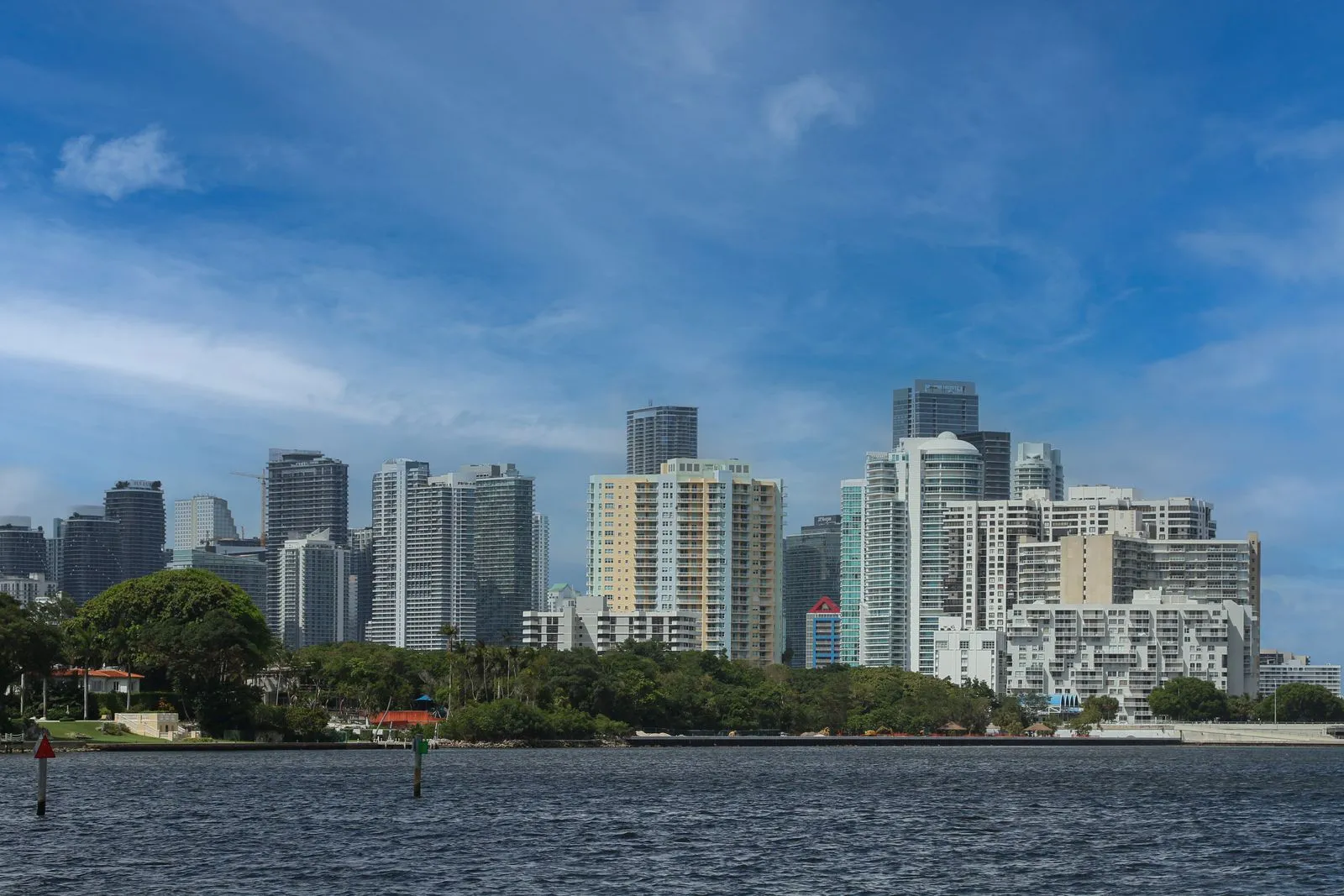
The short version
There are four verified, accredited PMHNP programs in the Miami metro: Florida International University, Nova Southeastern in Fort Lauderdale, the University of Miami in Coral Gables, and Palm Beach Atlantic in West Palm Beach. They are spread over about 100 miles of coastline, so "local" is a real question here.
Only one of the four publishes its clinical placement model, and it is the one that puts the work on you. FIU states that students arrange their own preceptors; the other three say nothing. That is a question for admissions, not a detail to assume.
Florida is a restricted-practice state, and the escape hatch does not apply to psychiatry. Fla. Stat. § 464.0123 limits autonomous APRN registration to primary care. A PMHNP practices under a physician protocol indefinitely.
Miami NPs earn a median of $131,340, which is about $960 below the national median of $132,300 (BLS OEWS, May 2025). It is the rare large metro that does not pay a premium.
There are four PMHNP programs in Miami and the surrounding metro, which is more than most cities on this site can offer. The catch is geography. The Bureau of Labor Statistics treats Miami, Fort Lauderdale and West Palm Beach as one metropolitan area, and it is right to, but it is also about 100 miles end to end in traffic that is genuinely bad. Palm Beach Atlantic is not a realistic weekly commute from Coral Gables. Work out which of these four you could actually reach before you compare anything else about them.
The second thing to settle early is clinical placement. Three of the four schools publish nothing about who secures your psychiatric preceptor, and the one that does publish it, FIU, says the student arranges it. South Florida has a large clinical market, but psychiatric preceptors are the scarce kind everywhere, and a program that leaves the search to you can add a semester without telling you in advance. Treat that as the first filter when you compare the PMHNP programs in Miami, ahead of price.
For the statewide picture, including Gainesville, Jacksonville and Tampa-area options, see our Florida PMHNP page.
The Miami-Fort Lauderdale-West Palm Beach metro
Primary: Miami, Florida. Students commonly commute across the metro for the in-person clinical hours, so we include:
This guide follows the Miami-Fort Lauderdale-West Palm Beach metropolitan statistical area, which the BLS wage figures below also cover. It stretches roughly 100 miles along the coast, so treat travel time as a real filter on which of these programs is genuinely local to you.
PMHNP programs in Miami: the four verified options
Florida International University Nicole Wertheim College of Nursing and Health Sciences
Miami, FL
Nova Southeastern University Ron and Kathy Assaf College of Nursing
Fort Lauderdale, FL
University of Miami
Coral Gables, FL
Palm Beach Atlantic University School of Nursing
West Palm Beach, FL
Who finds your preceptor: Miami programs compared
Every PMHNP program requires several hundred hours of supervised psychiatric practice, and someone has to find the preceptor who supervises them. In South Florida that someone is usually you, or it is unstated, which amounts to the same planning problem.
Here is where each of the PMHNP programs in Miami stands, taken from what the school itself publishes. Florida International University is the only one of the four to describe its model in public, and it describes a student-arranged one. Where a school says nothing, we say so rather than infer a model from its marketing.
| Program | Who secures the placement | What that means for you |
|---|---|---|
| Florida International University Nicole Wertheim College of Nursing and Health Sciences MSN | Student-arranged | You must find your own preceptor and clinical site; the school handles the paperwork. |
| Nova Southeastern University Ron and Kathy Assaf College of Nursing MSN | Not published Unverified | The school does not state who secures preceptors. Ask admissions directly before you apply — we will not guess it. |
| University of Miami Post-Master's Certificate | Not published Unverified | The school does not state who secures preceptors. Ask admissions directly before you apply — we will not guess it. |
| Palm Beach Atlantic University School of Nursing BSN-to-DNP | Not published Unverified | The school does not state who secures preceptors. Ask admissions directly before you apply — we will not guess it. |
Licensure in Florida, and the autonomous route that does not cover psychiatry
To practice in Florida you need APRN licensure from the Florida Board of Nursing, which requires an active Florida or compact RN license, a graduate-level APRN program in your role and population focus, and national certification. For PMHNPs that is the ANCC Psychiatric-Mental Health Nurse Practitioner (Across the Lifespan) exam. All four metro programs are built to make you eligible for it.
Then comes the part that gets misread constantly. Florida is classified restricted practice, and APRNs practice under a written protocol with a supervising physician. Since 2020 the state has offered a way out: register as an Autonomous APRN after at least 3,000 clinical practice hours under physician supervision within the preceding five years. Florida nurse practitioners talk about this constantly, and general-purpose nursing sites describe it as the state's path to independence.
It is not a path for you. Fla. Stat. § 464.0123 states that an autonomous APRN may "engage in autonomous practice only in primary care practice, including family medicine, general pediatrics, and general internal medicine." Psychiatric-mental health is not primary care and is not in that list. A family nurse practitioner in Miami can clear 3,000 hours and register for autonomy. A psychiatric nurse practitioner in Miami works under a physician protocol for as long as they practice in the state, no matter how many hours they accumulate.
That is not a reason to avoid Florida. The state has a severe behavioral health workforce shortage and South Florida has the clinical volume to train in. But if the plan is eventually to own a psychiatric practice, this is the constraint to weigh before committing several years and a lot of tuition, and it is the single most common thing readers get wrong about practicing here.
What the state requires
- Active Florida RN license, or an RN license with multistate privilege
- Completion of a graduate-level APRN program in the psychiatric-mental health role and population focus
- National PMHNP certification (ANCC Psychiatric-Mental Health NP, Across the Lifespan)
- A written protocol with a supervising physician, filed with the Board of Nursing
- Prescriptive authority exercised under that protocol, including controlled substances with federal DEA registration
- Autonomous APRN registration is limited to primary care under Fla. Stat. § 464.0123 and is not available for psychiatric practice
State board: Florida Board of Nursing
Accredited online PMHNP programs Miami residents can do
Most PMHNP study is online. These verified, accredited programs enroll students from most states and let you complete the supervised clinical hours near you. Online programs set their own state authorization, so confirm each one admits Florida residents before you apply.
California State University, Fresno
CCNE-accredited · post-master's certificate · 540 clinical hrs
Program pageDrexel University College of Nursing and Health Professions
CCNE-accredited · post-master's certificate · 640 clinical hrs
Program pageFairleigh Dickinson University Henry P. Becton School of Nursing and Allied Health
ACEN-accredited · MSN · 750 clinical hrs
Program pageGeorgia Southern University School of Nursing
CCNE-accredited · BSN-to-DNP · 630 clinical hrs
Program pageGeorgia State University Byrdine F. Lewis College of Nursing and Health Professions
CCNE-accredited · MSN · 500 clinical hrs
Program pageHerzing University
CCNE-accredited · MSN / post-master's certificate · 540 clinical hrs
Program pageJohns Hopkins University School of Nursing
CCNE-accredited · post-master's certificate · 500 clinical hrs
Program pageLa Salle University School of Nursing and Health Sciences
CCNE-accredited · MSN · 692 clinical hrs
Program pageLewis University College of Nursing and Health Sciences
CCNE-accredited · MSN · 540 clinical hrs
Program pageNorthern Kentucky University School of Nursing
CCNE-accredited · MSN · 750 clinical hrs
Program pageRadford University School of Nursing
CCNE-accredited · post-master's certificate · 540 clinical hrs
Program pageRocky Mountain University of Health Professions
CCNE-accredited · post-master's certificate · 540 clinical hrs
Program pageSimmons University
CCNE-accredited · MSN / post-master's certificate · 756 clinical hrs
Program pageUniversity of Cincinnati College of Nursing
CCNE-accredited · post-master's certificate
Program pageUniversity of South Alabama College of Nursing
CCNE-accredited · MSN / post-master's certificate · 600 clinical hrs
Program pageConfirm current state authorization with each program. For the full comparison, see our online PMHNP ranking.
How to become a PMHNP in the Miami area
The path to becoming a psychiatric-mental health nurse practitioner in the Miami area is the same graduate-nursing route used nationwide, with one local variable: your APRN license and prescriptive authority come from the Florida Board of Nursing. Here are the five steps.
- 01
Earn a BSN and an RN license
Most PMHNP programs admit Bachelor of Science in Nursing (BSN) graduates who hold an active RN license. If you start with an associate degree or a non-nursing bachelor's, bridge programs exist. You'll practice on a Florida RN license while you complete graduate school.
- 02
Enroll in an accredited PMHNP program
Choose an MSN or a BSN-to-DNP with a PMHNP focus. The degree must hold CCNE or ACEN accreditation, or it won't qualify you for the certification exam. Florida has 4 verified in-state programs (listed above), and 46 accredited online programs also enroll Florida residents.
- 03
Complete a minimum of 500 supervised clinical hours
The ANCC requires at least 500 faculty-supervised clinical hours, and many programs require 600 to 750. Securing local clinical placements is the biggest practical hurdle, so confirm whether a program arranges your preceptors before you enroll.
- 04
Pass the ANCC PMHNP-BC certification exam
The ANCC PMHNP-BC first-time pass rate was 83% in 2024 and 82% in 2025. Either the ANCC exam or the newer AANPCB PMHNP exam qualifies you for state licensure; ANCC's PMHNP-BC is the one most employers list by name.
- 05
Get Florida APRN licensure and DEA registration
The Florida Board of Nursing issues your APRN license and prescriptive authority once you're certified, and a federal DEA registration lets you prescribe controlled substances. Practice authority varies by state, so confirm current Florida requirements with the board before you enroll.
For the full national pathway, including itemized cost, timeline, and program selection advice, see our complete guide on how to become a PMHNP.
What it costs to study in Miami
The four metro programs sit at different points on both price and starting point, which makes a straight per-credit comparison misleading. Florida International University is public, so Florida residency is the biggest single lever on what it costs you. Nova Southeastern, the University of Miami and Palm Beach Atlantic are private, where residents and non-residents pay the same.
They also start in different places. The University of Miami's option is a post-master's certificate for nurses who already hold an APRN credential, so its 504 clinical hours and shorter course list are not comparable to a BSN-to-DNP at Palm Beach Atlantic or FIU's 1,170-hour master's. Compare total cost for the specific track that matches where you are starting, not per-credit rates across tracks.
On the living side, South Florida housing costs have risen sharply while, as the pay section below shows, NP wages here have not kept pace with the rest of the country. That gap is the honest headline for anyone weighing whether to stay in the metro after graduating.
Where you complete clinical hours
South Florida's clinical market is large and genuinely varied, which helps if you are doing the searching yourself. The metro carries academic health systems, a substantial public hospital sector, VA facilities, and a large private behavioral health and substance use treatment industry, the last of which is more developed here than in most metros.
Language is a real factor in placement here in a way it is not elsewhere. Miami-Dade is majority Spanish-speaking, and psychiatric assessment depends on nuance in a patient's own language more than most specialties do. A bilingual student has a materially wider set of usable sites, and it is worth raising with programs directly, because it affects which placements they can offer you.
Academic health systems
University-affiliated hospital systems across Miami-Dade and Broward that host graduate nursing rotations.
Public and safety-net hospitals
The metro's public hospital districts, which carry a large share of acute psychiatric presentations.
Behavioral health and substance use treatment
South Florida has an unusually large private treatment sector, a common setting for supervised psychiatric hours.
Federal and veterans facilities
VA medical centers in Miami and West Palm Beach, which run accredited nursing training programs.
Who hires PMHNPs in Miami
We name employers only where we can point at a source, so this section stays short rather than listing every hospital between Miami and West Palm Beach. The structural point is more useful anyway: because Florida requires a written physician protocol for psychiatric practice, your employer here is not only a payer. It is also the entity that supplies the supervising physician relationship that makes your practice lawful.
Ask how that works during interviews rather than after. Specifically: who the supervising physician is, how much of their time the protocol actually involves, and what happens to your ability to work if that physician leaves the organization.
What PMHNPs earn in the Miami metro
These are metro-specific figures, not state numbers standing in for a city. BLS OEWS (May 2025) counts 5,810 nurse practitioners in the Miami-Fort Lauderdale-West Palm Beach metro, with a median wage of $131,340 and a mean of $136,150. The quartiles run from $118,960 at the 25th percentile to $149,990 at the 75th.
The headline is what is missing. Miami's median sits about $960 below the national NP median of $132,300. Large metros usually pay a premium over the national figure, because they concentrate specialists and carry higher costs, and Miami does not. Set against Seattle at $160,090 or Washington at $134,840, South Florida is the outlier among the big metros we cover, and it is an outlier in the wrong direction for a place with this cost of housing.
The top of the market is healthier than the middle. The metro's 90th percentile of $169,060 is only about $5,400 below the national 90th percentile, so experienced NPs here are closer to their national peers than typical ones are. We would not claim a single cause, though it is worth reading alongside the licensure section above: a state that keeps psychiatric NPs under a physician protocol permanently removes the ownership route that lifts top-end pay elsewhere. For pay by setting and practice model, see our PMHNP salary guide.
Figures cover nurse practitioners generally (SOC 29-1171); BLS does not publish a separate psychiatric-mental health NP wage. Psychiatric-mental health is among the higher-paying NP specialties nationally, so read these as a floor rather than a ceiling for the specialty.
Other PMHNP city guides
The PMHNP programs in Miami are worth comparing against a metro on the other end of both the pay range and the regulatory range, which is the fastest way to see what the physician-protocol requirement costs.
Keep researching
PMHNP Programs in Florida
Every verified Florida program, plus licensure and pay statewide.
Post-Master's PMHNP Certificates
The certificate route, which is how the University of Miami offers the PMHNP.
How to Become a PMHNP
The pathway, certification, and clinical-hour requirement.
PMHNP Salary Guide
What psychiatric NPs earn by state, experience, and setting.
PMHNP in Miami, answered
Are there PMHNP programs in Miami?+
Which Miami PMHNP program arranges your clinical placements?+
Can a PMHNP practice independently in Florida?+
What do PMHNPs earn in Miami?+
Does being bilingual help a PMHNP in Miami?+
Can I become a PMHNP in Miami through an online program?+
Program details and figures trace to primary sources; gaps are labeled, not estimated.
- [1] Per-program details (credits, clinical hours, delivery mode, placement model, accreditation) trace to each school's own pages and the CCNE/ACEN directory, captured in our verified PMHNP program dataset
- [2] Fla. Stat. § 464.0123 — Autonomous practice by an advanced practice registered nurse (3,000-hour eligibility; autonomous practice limited to primary care)
- [3] AANP State Practice Environment — Florida (classified "Restricted Practice")
- [4] Florida Board of Nursing — Advanced Practice Registered Nurse licensure and autonomous registration
- [5] U.S. Bureau of Labor Statistics, OEWS May 2025 — Nurse Practitioners (29-1171), Miami-Fort Lauderdale-West Palm Beach, FL metropolitan area
- [6] U.S. Bureau of Labor Statistics, Occupational Outlook Handbook: Nurse Practitioners (national median wage)