Can a PMHNP Diagnose Autism? Scope, Training, and Payers
Yes, a PMHNP can diagnose autism. Whether TRICARE, Medicaid or a school accepts that diagnosis is a separate question, and the answers differ.
Published
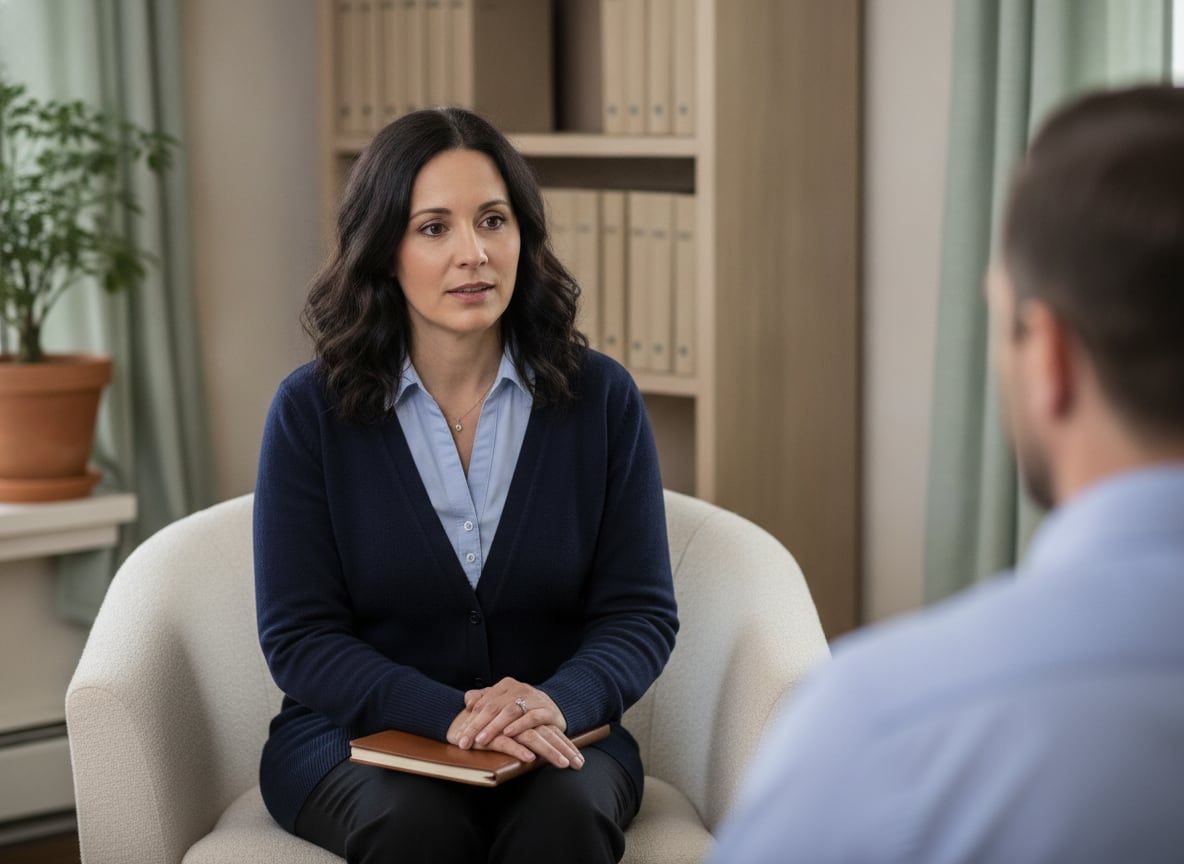
Yes, a PMHNP can diagnose autism. Diagnosing psychiatric and neurodevelopmental conditions is part of a psychiatric-mental health nurse practitioner's scope in every state, and the ANCC certifies PMHNPs "across the lifespan", which covers children. But "can a PMHNP diagnose autism" is really three questions stacked on top of each other. Is it legal? Is this PMHNP trained to do it well? And will the people paying for services, like an insurer, TRICARE or a Medicaid ABA program, accept the diagnosis once it's made? The first answer is yes almost everywhere. The other two depend on the clinician and the payer, and that's where families and new PMHNPs get caught out.
This guide takes each question in turn, with the state-by-state practice rules from our own dataset and the actual wording of the payer rules that decide whether a PMHNP's autism diagnosis gets a child into therapy.
Can a PMHNP Diagnose Autism Under State Law?
Yes. Autism spectrum disorder is defined in the DSM-5-TR, the diagnostic manual the American Psychiatric Association publishes, and diagnosing DSM conditions is the core of what a PMHNP does. There's no separate autism license. A PMHNP who can diagnose depression or ADHD in your state can legally diagnose autism there too.
What state law does change is who else has to be involved. The AANP sorts every state into full, reduced or restricted practice. In a full-practice state, NPs evaluate, diagnose and treat under the board of nursing alone. In reduced and restricted states, the same PMHNP still makes the diagnosis, but works inside a career-long collaborative agreement or supervision arrangement with a physician.
| Practice authority | Count | Jurisdictions |
|---|---|---|
| Full practiceDiagnose and treat under the board of nursing alone | 28 | Alaska, Arizona, Colorado, Connecticut, Delaware, District of Columbia, Hawaii, Idaho, Iowa, Kansas, Maine, Maryland, Massachusetts, Minnesota, Montana, Nebraska, Nevada, New Hampshire, New Mexico, New York, North Dakota, Oregon, Rhode Island, South Dakota, Utah, Vermont, Washington, Wyoming |
| Reduced practiceCareer-long collaborative agreement required | 12 | Alabama, Arkansas, Illinois, Indiana, Kentucky, Louisiana, Mississippi, New Jersey, Ohio, Pennsylvania, West Virginia, Wisconsin |
| Restricted practiceCareer-long supervision or delegation required | 11 | California, Florida, Georgia, Michigan, Missouri, North Carolina, Oklahoma, South Carolina, Tennessee, Texas, Virginia |
So 28 of 51 jurisdictions let a PMHNP diagnose autism with no physician agreement at all, and the other 23 let them do it with one. None of them carve autism out. If you want the licensing detail for a specific state, our PMHNP state requirements lookup links each board of nursing.
Being Allowed to Diagnose Autism Isn't the Same as Being Trained To
This is where the answer gets less tidy. Scope of practice tells you a PMHNP is permitted to diagnose autism. It says nothing about whether a given PMHNP has trained in autism assessment, and that training is its own skill set.
There's no blood test or scan for autism. The CDC says plainly that "there is no medical test", so the diagnosis rests on developmental history and on watching how a person communicates and interacts. The instrument most formal evaluations are built around is the ADOS-2, a standardized observation that takes 40 to 60 minutes, covers ages 12 months to adulthood, and comes in 5 modules matched to the person's language level. WPS sells it at qualification Level C, a master's in psychology or a related field, and WPS itself notes that "additional training and experience may be required for the proper use of specific instruments."
That gap is why the referral lists you'll see rarely start with a nurse practitioner. The CDC points families toward "a developmental pediatrician, child psychologist, speech-language pathologist, and/or occupational therapist." The American Psychiatric Association's guidance is similar: concerns "should lead to a specialized evaluation by a developmental pediatrician, pediatric psychologist, child neurologist and/or a child and adolescent psychiatrist." Neither list names PMHNPs. That isn't a legal bar. It reflects who usually carries the specialized assessment training.
So a PMHNP might work either way. One screens, recognizes autism and refers a young child to a team for formal testing. Another trains specifically in autism assessment, learns the ADOS-2 and structured developmental interviews, and makes autism evaluation part of the practice. Both are legitimate. If you're a parent, ask which kind of PMHNP you're booking with before the appointment.
Who Accepts an Autism Diagnosis From a PMHNP?
This is the question that actually decides whether a diagnosis leads anywhere. Applied behavior analysis (ABA) and other autism services are usually authorized by a payer, and payers write their own rules about whose diagnosis counts. Three of the biggest systems show how different those rules can be.
Three payers and systems, three different answers. Each row was read from the primary source on September 28, 2026.
| Who decides | What the rule says | What it means for a PMHNP |
|---|---|---|
| TRICARE Autism Care Demonstration (military families) | Approved diagnosing providers include "Pediatric or family nurse practitioners" and "Doctors of Nursing Practice, meeting certain criteria," alongside pediatricians, psychologists and psychiatrists. | There is no PMHNP line. A PMHNP with a DNP may qualify under the DNP criteria, and one who also holds pediatric or family NP certification may fit the NP line. Confirm with the regional contractor before the evaluation. |
| Washington Apple Health (Medicaid) ABA coverage | A Center of Excellence provider must establish or confirm the diagnosis. Psychiatrists, psychologists and certain specialists qualify directly. ARNPs "including psychiatric mental health nurse practitioners" must complete the agency's COE training "for all ages" and be prequalified. | PMHNPs are named in the rule. You can diagnose for ABA coverage after completing the state's training and showing expertise, for example by "using a validated diagnostic tool." |
| Public schools (IDEA special education) | Eligibility is decided by "a group of qualified professionals and the parent of the child," using an educational definition of autism that turns on whether it "adversely affects a child's educational performance." | A school does not need anyone's medical diagnosis to find a child eligible, and a medical diagnosis does not make a child eligible on its own. A PMHNP's evaluation is one input the team can consider. |
TRICARE is the clearest example of a payer that names nurse practitioners but not PMHNPs. Its Autism Care Demonstration, which covers ABA for military families and is authorized through Dec. 31, 2028, accepts pediatric or family NPs and DNPs "meeting certain criteria." A master's-prepared PMHNP isn't on that list. TRICARE also requires a new referral from the diagnosing provider every two years, so the question comes back around. If you're a PMHNP working with military families, the doctorate matters here.
Washington's Medicaid program goes the other way and names PMHNPs outright. Under WAC 182-531A-0800, ARNPs "including psychiatric mental health nurse practitioners" can serve as the Center of Excellence that establishes the diagnosis for ABA coverage, once they complete the state's training "for all ages" and show expertise, for example by "using a validated diagnostic tool." So a Washington PMHNP can get there, with extra steps a psychiatrist doesn't face.
Public schools don't need a medical diagnosis at all. Under IDEA, eligibility for special education is decided by "a group of qualified professionals and the parent of the child", using an educational definition of autism that asks whether it "adversely affects a child's educational performance." A PMHNP's evaluation can inform that decision, but it can't make it, and neither can a psychiatrist's.
Private insurance rules are set plan by plan. Call the plan and ask whose diagnosis it accepts for ABA, in writing if you can, before the evaluation happens.
Why Autism Assessment Is a Real Niche for PMHNPs
Demand isn't the problem. The CDC's latest estimate puts autism at about 1 in 31 children (3.2%) at age 8, from its 2022 surveillance data. A PMHNP trained to diagnose autism well, and whose diagnosis the local payers accept, adds capacity alongside the psychologists and developmental pediatricians who do most of this work today.
If this is the work you want, here's what it takes, in order:
- Get a program with real child and adolescent clinical hours. Every PMHNP program trains you across the lifespan. Ask each program how many of your clinical hours will be with children and adolescents. Our child and adolescent PMHNP guide covers how people steer toward pediatric work.
- Train in a structured instrument. Plan on formal training in a tool such as the ADOS-2. WPS, which sells it, says additional training may be needed to use its instruments properly.
- Think about the DNP if you'll serve military families. TRICARE's list includes DNPs meeting its criteria and leaves out master's-prepared PMHNPs. Our dataset tracks 51 BSN-to-DNP PMHNP programs at 51 schools, ranked in our DNP PMHNP programs list, and our MSN vs DNP guide weighs whether the extra years pay off.
- Learn your state's payer rules before you market the service. A diagnosis families can't use for coverage frustrates everyone. Washington's rule shows the kind of training requirement you might need to meet.
Already an NP in another specialty? A post-master's PMHNP certificate is the shortest route into psychiatric practice, and family NPs keep the "family nurse practitioner" standing that TRICARE lists.
What to Ask a PMHNP Before an Autism Evaluation
If you're a parent or an adult seeking a diagnosis, a PMHNP can be a good door in. Before you book, ask four things:
- Do you do full autism evaluations, or do you screen and refer?
- Which instruments do you use, and are you trained in them?
- Will my insurer, TRICARE plan or Medicaid program accept your diagnosis for ABA or other services?
- Will I get a written report I can share with my child's school?
A good PMHNP will answer all four without hedging. And if the evaluation leads to a treatment plan that includes medication, a PMHNP can prescribe it. We cover that side in can a PMHNP prescribe medication and, for stimulants specifically, can a nurse practitioner prescribe Adderall.
The Bottom Line on PMHNPs and Autism Diagnosis
A PMHNP can diagnose autism in all 51 jurisdictions, with no physician involved in 28 of them. Whether a particular PMHNP should diagnose autism, and whether the diagnosis will unlock services, comes down to training and to the payer's rulebook. For families, that means asking before the appointment. For future PMHNPs, it means autism assessment is a skill you build on purpose after graduation, not one the degree hands you. When you're ready to compare programs, start with our PMHNP programs ranking or browse accredited programs by state.
Every figure on this page traces to a primary source.
- [1] AANP, State Practice Environment: NP practice authority by state (updated 05/2026) Verified 2026-06-30
- [2] TRICARE, Autism Care Demonstration: approved ASD diagnosing providers Verified 2026-09-28
- [3] Washington State Legislature, WAC 182-531A-0800: Center of Excellence provider qualifications, including psychiatric mental health nurse practitioners Verified 2026-09-28
- [4] U.S. Department of Education (via Cornell LII), 34 CFR 300.306: determination of eligibility Verified 2026-09-28
- [5] U.S. Department of Education (via Cornell LII), 34 CFR 300.8(c)(1): the IDEA definition of autism Verified 2026-09-28
- [6] WPS, ADOS-2 (Autism Diagnostic Observation Schedule, Second Edition): administration time, age range, qualification level Verified 2026-09-28
- [7] WPS, Qualification Guidelines: purchase levels and the note that additional training may be required Verified 2026-09-28
- [8] CDC, Data and Statistics on Autism Spectrum Disorder: about 1 in 31 (3.2%) children aged 8, ADDM 2022 Verified 2026-09-28
- [9] CDC, Screening and Diagnosis of Autism Spectrum Disorder Verified 2026-09-28
- [10] American Psychiatric Association, What Is Autism Spectrum Disorder? Verified 2026-09-28
- [11] ANCC, Psychiatric-Mental Health Nurse Practitioner (Across the Lifespan) Certification (PMHNP-BC) Verified 2026-09-28
Keep going
Explore PMHNP programs
Ready to take the next step? Browse our expert-ranked program listings.