PMHNP Programs in Detroit
Michigan lets a nurse practitioner prescribe an antidepressant without a physician's sign-off, and does not let one prescribe a stimulant on the same terms. For a psychiatric specialty that distinction is the whole ballgame. Below: the one PMHNP program based in the metro, what Michigan's restricted status really costs you, how Ohio differs, and what Detroit pays.
The short version
Wayne State University runs the one verified, CCNE-accredited PMHNP program based in the Detroit metro, a Master of Science in Nursing in the psychiatric mental health nurse practitioner role.
The University of Michigan-Flint is in the Flint metro, a separate statistical area, so it is not counted on this page. Our Michigan PMHNP page carries the statewide list.
Michigan is a restricted-practice state, and the restriction lands unevenly. APRNs may prescribe non-controlled drugs without delegation, but controlled substances require a written delegation agreement with a physician. Psychiatric prescribing leans on controlled substances more than most specialties do.
Ohio, next door, is one category less restrictive. It is classified reduced practice, where the required instrument is a collaborative standard care arrangement rather than physician delegation. If you are weighing a move rather than a commute, that difference is worth understanding before you sign a lease.
Detroit NPs earn a median of $134,390, above both the Michigan median of $131,450 and the national NP median of $132,300, with a notably strong 25th percentile of $126,050 (BLS OEWS, May 2025).
Michigan does something unusual with nurse practitioner prescribing. An APRN here may prescribe non-controlled drugs without a delegation agreement, which sounds close to independence. But prescribing controlled substances, schedules 2 through 5, requires a written delegation agreement with a physician. For a family or primary care NP, that is a manageable limit on one corner of the job. For a psychiatric NP it is closer to the center of the work, because stimulants, benzodiazepines and several other mainstays of psychiatric treatment are controlled substances.
That rule shapes what PMHNP programs in Detroit lead to, and it is the reason this page spends more of its length on licensure than on curriculum. The clinical training you get at Wayne State prepares you for the same national certification as a program in a full-practice state. What differs is what you are permitted to do with it afterward, and that is a function of which state's license you hold rather than which school taught you.
Ohio, immediately south, is classified one category less restrictive. That is not a reason to leave Michigan and it is a real consideration for anyone who was already flexible about where to settle. The rest of this page covers the program based here, where clinical hours get done, how Michigan and Ohio actually differ, and a metro wage picture that is genuinely strong through the middle.
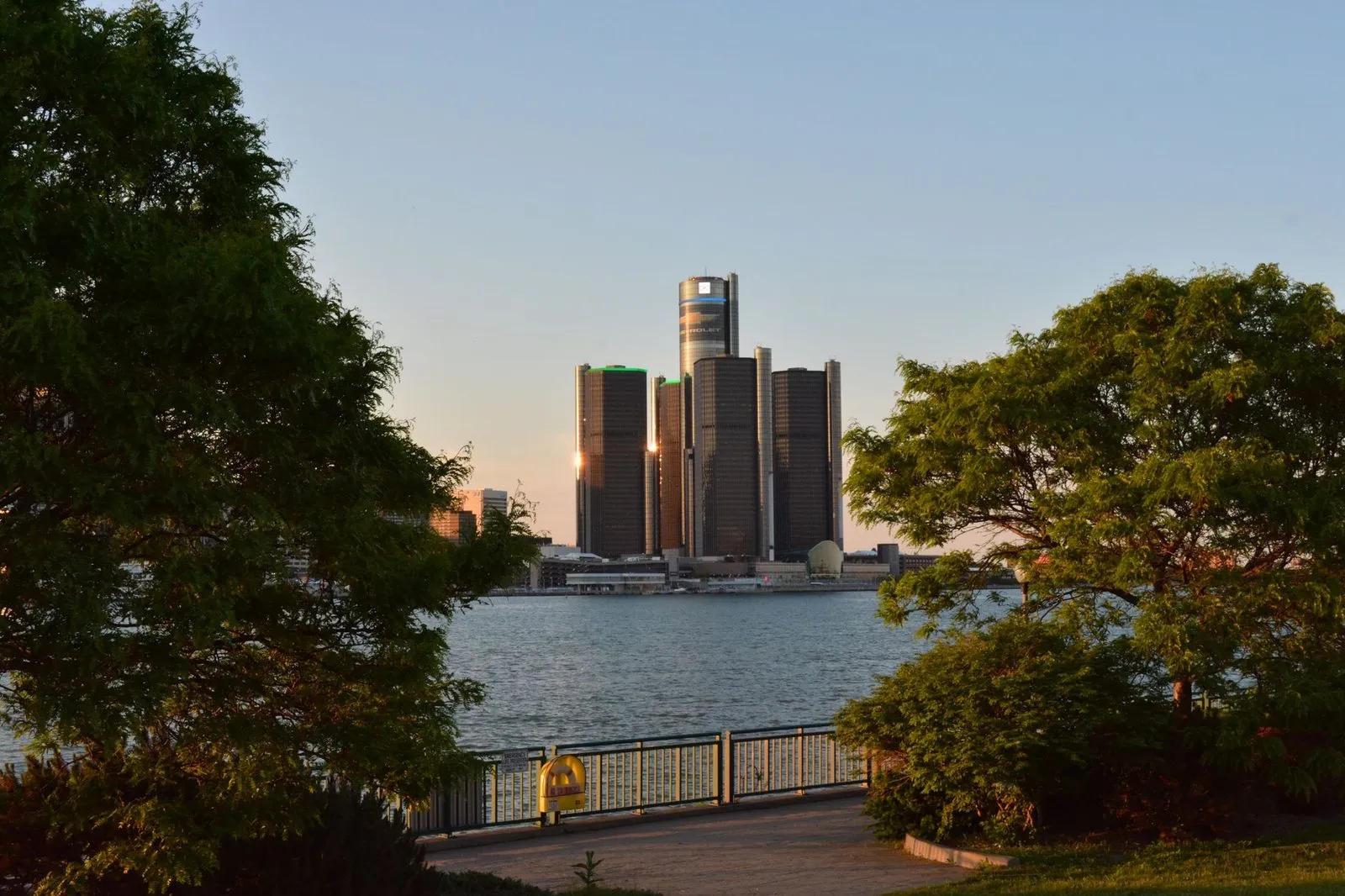
The Detroit-Warren-Dearborn metro
Primary: Detroit, Michigan. Students commonly commute across the metro for the in-person clinical hours, so we include:
The BLS wage figures below cover the Detroit-Warren-Dearborn metropolitan statistical area. Flint is a separate metro area and its figures are not included here, which is also why the University of Michigan-Flint does not appear in the program list above.
PMHNP programs in Detroit: the one based in the metro
Wayne State University
Detroit, MI
Michigan is restricted practice, and psychiatry is where that bites
Licensure runs through the Michigan Board of Nursing, on top of national certification. For PMHNPs that is the ANCC Psychiatric-Mental Health Nurse Practitioner (Across the Lifespan) exam, and an accredited graduate program in the psychiatric-mental health role and population focus is what makes you eligible to sit it.
Then comes the part that distinguishes this state. The AANP classifies Michigan as restricted practice, the most limiting of the three national categories, which means state law requires career-long supervision, delegation or team management by another provider for at least one element of practice. In Michigan that element is prescribing, and the rule splits in a specific way: APRNs may prescribe non-controlled drugs without delegation, but prescribing controlled substances in schedules 2 through 5 requires a written delegation agreement with a physician.
Read that against what a psychiatric practice actually involves. A great deal of psychiatric prescribing is non-controlled, and for that part of the work Michigan is comparatively permissive. But stimulants for attention deficit disorders, benzodiazepines for acute anxiety, and several agents used in substance use treatment are controlled. A PMHNP who cannot prescribe them independently cannot run an independent psychiatric practice in any meaningful sense, which is why Michigan's restriction, mild-sounding in the abstract, is more consequential for this specialty than for most others.
The contrast with Ohio is the one worth holding in mind if relocating is on the table. Ohio is classified reduced practice, one category less limiting, and the instrument there is a standard care arrangement with a collaborating physician or podiatrist. The distinction is not cosmetic: a collaborative relationship is a professional arrangement between practitioners, while delegation is a chain of authority in which the physician is extending their own prescribing power to you. Neither state gives you independence, and the day-to-day experience of the two is not the same. Our Cleveland guide covers the Ohio market next door.
The practical takeaway for a Detroit job search is narrow and important. Your ability to prescribe controlled substances is attached to a delegation agreement with a specific physician at a specific employer. Ask during interviews who the delegating physician is, whether the agreement covers controlled substances or only the non-controlled tier, and what happens to your prescribing if that physician leaves. Those are not awkward questions here; they are the questions that determine what your job actually is.
What the state requires
- Active Michigan RN license
- Completion of a graduate-level APRN program in the psychiatric-mental health role and population focus
- National PMHNP certification (ANCC Psychiatric-Mental Health NP, Across the Lifespan)
- APRN specialty certification recognized by the Michigan Board of Nursing
- Non-controlled prescribing without a delegation agreement
- A written physician delegation agreement to prescribe controlled substances in schedules 2 through 5
- Federal DEA registration to prescribe controlled substances
State board: Michigan Board of Nursing
Accredited online PMHNP programs Detroit residents can do
Most PMHNP study is online. These verified, accredited programs enroll students from most states and let you complete the supervised clinical hours near you. Online programs set their own state authorization, so confirm each one admits Michigan residents before you apply.
California State University, Fresno
CCNE-accredited · post-master's certificate · 540 clinical hrs
Program pageDrexel University College of Nursing and Health Professions
CCNE-accredited · post-master's certificate · 640 clinical hrs
Program pageFairleigh Dickinson University Henry P. Becton School of Nursing and Allied Health
ACEN-accredited · MSN · 750 clinical hrs
Program pageGeorgia Southern University School of Nursing
CCNE-accredited · BSN-to-DNP · 630 clinical hrs
Program pageGeorgia State University Byrdine F. Lewis College of Nursing and Health Professions
CCNE-accredited · MSN · 500 clinical hrs
Program pageHerzing University
CCNE-accredited · MSN / post-master's certificate · 540 clinical hrs
Program pageJohns Hopkins University School of Nursing
CCNE-accredited · post-master's certificate · 500 clinical hrs
Program pageLa Salle University School of Nursing and Health Sciences
CCNE-accredited · MSN · 692 clinical hrs
Program pageLewis University College of Nursing and Health Sciences
CCNE-accredited · MSN · 540 clinical hrs
Program pageNorthern Kentucky University School of Nursing
CCNE-accredited · MSN · 750 clinical hrs
Program pageRadford University School of Nursing
CCNE-accredited · post-master's certificate · 540 clinical hrs
Program pageRocky Mountain University of Health Professions
CCNE-accredited · post-master's certificate · 540 clinical hrs
Program pageSimmons University
CCNE-accredited · MSN / post-master's certificate · 756 clinical hrs
Program pageUniversity of Cincinnati College of Nursing
CCNE-accredited · post-master's certificate
Program pageUniversity of South Alabama College of Nursing
CCNE-accredited · MSN / post-master's certificate · 600 clinical hrs
Program pageConfirm current state authorization with each program. For the full comparison, see our online PMHNP ranking.
How to become a PMHNP in the Detroit area
The path to becoming a psychiatric-mental health nurse practitioner in the Detroit area is the same graduate-nursing route used nationwide, with one local variable: your APRN license and prescriptive authority come from the Michigan Board of Nursing. Here are the five steps.
- 01
Earn a BSN and an RN license
Most PMHNP programs admit Bachelor of Science in Nursing (BSN) graduates who hold an active RN license. If you start with an associate degree or a non-nursing bachelor's, bridge programs exist. You'll practice on a Michigan RN license while you complete graduate school.
- 02
Enroll in an accredited PMHNP program
Choose an MSN or a BSN-to-DNP with a PMHNP focus. The degree must hold CCNE or ACEN accreditation, or it won't qualify you for the certification exam. Michigan has 1 verified in-state program (listed above), and 46 accredited online programs also enroll Michigan residents.
- 03
Complete a minimum of 500 supervised clinical hours
The ANCC requires at least 500 faculty-supervised clinical hours, and many programs require 600 to 750. Securing local clinical placements is the biggest practical hurdle, so confirm whether a program arranges your preceptors before you enroll.
- 04
Pass the ANCC PMHNP-BC certification exam
The ANCC PMHNP-BC first-time pass rate was 83% in 2024 and 82% in 2025. Either the ANCC exam or the newer AANPCB PMHNP exam qualifies you for state licensure; ANCC's PMHNP-BC is the one most employers list by name.
- 05
Get Michigan APRN licensure and DEA registration
The Michigan Board of Nursing issues your APRN license and prescriptive authority once you're certified, and a federal DEA registration lets you prescribe controlled substances. Practice authority varies by state, so confirm current Michigan requirements with the board before you enroll.
For the full national pathway, including itemized cost, timeline, and program selection advice, see our complete guide on how to become a PMHNP.
What a Detroit PMHNP program costs
Wayne State is a public university, so Michigan residency is the largest single lever on what the degree costs you. If you already live in the metro, that is an argument for the program based here that no out-of-state online option can match on price alone. If you are considering a move into Michigan, look up how the university defines residency and how long it takes to establish, because the answer is worth more than most scholarship applications.
Compare on total cost rather than per-credit rate. Credit counts, how practicum credits are billed, and how long a part-time route takes all move the final figure more than the headline rate does. Ask for a cost-of-attendance sheet for the psychiatric mental health track specifically, and confirm whether clinical-course credits are billed the same as didactic ones.
Detroit is an inexpensive metro to live in relative to its wages, and that combination is unusual. The salary section below shows a metro median above the national one; the cost of living here is not. Over a multi-year program with unpaid clinical hours, that gap is doing real work for you.
Where you complete clinical hours in metro Detroit
With one program based in the metro, the clinical placement question deserves a direct answer and Wayne State does not publish one. Put it to admissions in writing before you commit, in the specific form rather than the general: for your practicum courses, will the school assign you a preceptor and site, or are you responsible for finding them? A general question about clinical support reliably produces a general answer.
The metro itself is a reasonable place to be asking. Detroit-Warren-Dearborn is a large market with roughly 3,400 nurse practitioners working in it, which is a meaningfully deeper pool of potential preceptors than most metros this page's readers will be choosing between. Depth does not guarantee you a psychiatric preceptor, since psychiatric prescribers are scarcer than NPs generally everywhere, but it improves your odds.
One thing to be deliberate about while you are a student: seek rotations where the preceptor prescribes controlled substances under a delegation agreement, so you see how that mechanism works in practice. You will be operating inside it for your whole Michigan career, and watching a preceptor navigate it is a better education than reading the statute.
Academic and teaching hospitals
The metro carries large teaching hospital systems, the setting where inpatient psychiatric rotations and formal student agreements are most established.
Community behavioral health
Detroit has a substantial public and community mental health sector, which for psychiatric training means exposure to severe and persistent mental illness rather than only outpatient medication management.
Substance use treatment
Addiction treatment is a distinct psychiatric rotation and one where controlled-substance prescribing under delegation is visible day to day, which makes it instructive in a restricted-practice state.
Veterans and federal facilities
VA facilities in the metro run accredited nursing training programs and carry significant psychiatric caseloads, a recognized route for supervised psychiatric hours.
Who hires psychiatric NPs in Detroit, and what to ask them
We name employers only where we can point at a source, so this section stays short rather than listing every health system in southeast Michigan. What matters more is that in Michigan your employer is not only a payer. It is the source of the physician delegation agreement that determines whether you can prescribe controlled substances at all.
That makes the interview unusually technical, and it is worth going in with the questions written down. Who is the delegating physician for this role? Does the delegation cover controlled substances, or only the non-controlled tier that needs no agreement? Is the agreement already in place, or would it be built for you? What happens to my prescribing if that physician leaves the organization?
An employer that hires psychiatric NPs routinely will answer all four without hesitating. One that cannot is telling you something useful, because a PMHNP whose delegation agreement does not cover schedules 2 through 5 is a psychiatric prescriber with a hole in the middle of their formulary.
What PMHNPs earn in the Detroit metro
These are Detroit-specific figures, not Michigan numbers standing in for a metro. BLS OEWS (May 2025) counts 3,400 nurse practitioners in the Detroit-Warren-Dearborn metro, with a median wage of $134,390 and a mean of $137,290. The metro median runs $2,940 above the Michigan statewide median of $131,450 and $2,090 above the national NP median of $132,300.
The real strength of this market is not the median, it is the 25th percentile of $126,050. That figure sits $8,060 above the national 25th percentile of $117,990, which means the lower-middle of the Detroit market pays well by national standards. A high floor under the typical wage is worth more to someone starting out than a high ceiling is, because it describes the offers you are actually likely to receive in your first few years. The 10th percentile of $106,110 tells the same story, running $4,770 above the national 10th.
The ceiling is where Michigan's rules show up in the data. Detroit's 90th percentile of $164,390 falls $10,030 below the national 90th percentile of $174,420, and the metro mean of $137,290 lands within $10 of the national mean. Strong through the middle, compressed at the top, which is the shape you would expect where the state does not permit independent psychiatric practice and the ownership and cash-pay models that lift top-end earnings elsewhere are out of reach. For pay by setting and practice model, see our PMHNP salary guide.
Figures cover nurse practitioners generally (SOC 29-1171); BLS does not publish a separate psychiatric-mental health NP wage. Psychiatric-mental health is among the higher-paying NP specialties nationally, so read these as a floor rather than a ceiling for the specialty.
Other PMHNP city guides
Detroit is one of two Michigan metros we cover, and the comparison that matters most for this page is the one across the Ohio line, where the practice rules change category.
PMHNP Programs in Grand Rapids
The other Michigan metro we cover, under the same rules but paying $8,730 less at the median.
PMHNP Programs in Cleveland
The nearest large Ohio metro, where practice authority is reduced rather than restricted.
PMHNP Programs in Indianapolis
Another Midwest metro one category less restrictive, with a collaborative agreement requirement.
Keep researching
PMHNP Programs in Michigan
Every verified Michigan program, including the University of Michigan-Flint, plus statewide licensure and pay.
MSN PMHNP Programs
Master's-level PMHNP options nationally, which is the route Wayne State offers.
Best Online PMHNP Programs
The accredited online field, worth weighing against a single in-metro option.
PMHNP Salary Guide
What psychiatric NPs earn by state, experience, and setting.
PMHNP in Detroit, answered
Are there PMHNP programs in Detroit?+
Can a PMHNP prescribe independently in Michigan?+
How is Michigan different from Ohio for a psychiatric NP?+
What do PMHNPs earn in Detroit?+
Who arranges clinical placements at Wayne State?+
Can I become a PMHNP in Detroit through an online program?+
Program details and figures trace to primary sources; gaps are labeled, not estimated.
- [1] Per-program details (degree level, accreditation, delivery mode, placement model) trace to each school's own pages and the CCNE directory, captured in our verified PMHNP program dataset
- [2] Wayne State University College of Nursing: Master of Science in Nursing, Psychiatric Mental Health Nurse Practitioner
- [3] AANP State Practice Environment: Michigan (classified "Restricted Practice")
- [4] AANP State Practice Environment: Ohio (classified "Reduced Practice"), for the cross-border comparison
- [5] Michigan Board of Nursing: APRN licensure and controlled-substance delegation
- [6] U.S. Bureau of Labor Statistics, OEWS May 2025: Nurse Practitioners (29-1171), Detroit-Warren-Dearborn, MI metropolitan area
- [7] U.S. Bureau of Labor Statistics, Occupational Outlook Handbook: Nurse Practitioners (national median wage)